How to Prepare for Your Practical Driving Test
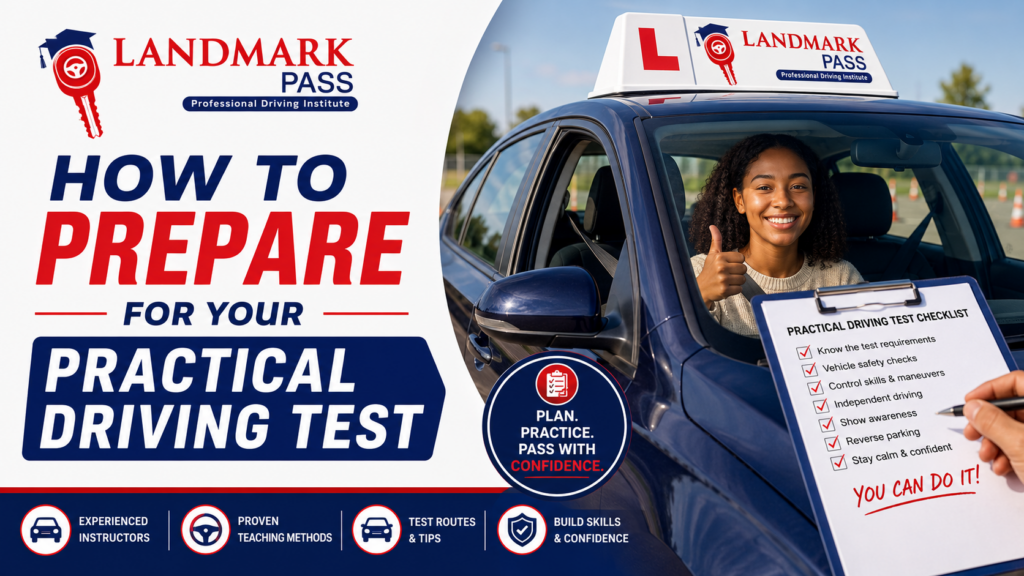
welcome to landmark pass How to Prepare for Your Practical Driving Test More than just driving lessons.At Landmark Pass, our goal isn’t simply to help you pass your driving test. We want you to become a safe, confident and responsible driver for life. Every lesson is designed around your individual progress, helping you understand not just what to do, but why. Book your first lesson How to Prepare for Your Practical Driving Test Passing your DVSA practical driving test comes down to two major factors: thorough technical preparation and controlling test-day nerves. While many learners focus entirely on vehicle control during their lessons, mental readiness and organizational preparation are just as critical to securing that first-time pass. DOCUMENTATION & NIGHT-BEFORE PREPARATIONThe foundation of a stress-free test day begins the night before. Gather all required documentation, including your photocard provisional driving license, your theory test pass certificate, and your booking confirmation email. Layout comfortable driving shoes (avoid thick-soled boots or heavy heels) and get a full night of restful sleep. Running around in a panic searching for lost paperwork on the morning of your test elevates your heart rate and sets a negative tone before you even sit in the vehicle. THE PRE-TEST WARMUP LESSONSchedule a 1-hour driving lesson with your instructor immediately prior to your official test time. This hour is not meant for learning new techniques; rather, it serves to get your feet back on the pedals, recalibrate your steering feel, and warm up your situational awareness. It allows you to shake off initial jitters, practice a quick maneuver, and get accustomed to the current weather and traffic conditions around the test centre area. MASTERING COMPLEX LOCAL TEST ROUTESDuring your final preparation weeks, dedicate practice sessions to navigating the specific challenges of your local test centre’s surrounding routes. Focus extra effort on multi-lane roundabouts, difficult dual carriageway merges, tight residential streets with parked car hazards, and speed-change zones. Becoming intimately familiar with local lane layouts and tricky junctions removes the element of surprise, leaving you free to focus strictly on safe decision-making. ADOPTING THE RIGHT MINDSETRemember that DVSA examiners are not looking for perfection; they are looking for safety. Examiners do not have a quota of failures to hit, nor are they actively trying to catch you out. Their primary job is to ensure that you can operate a vehicle independently without placing yourself, your examiner, or other road users at risk. Treat your examiner as a regular passenger who is simply giving you navigation directions, and drive with the calm, methodical approach you practice during your standard lessons.