UK Driving Rules You Should Know
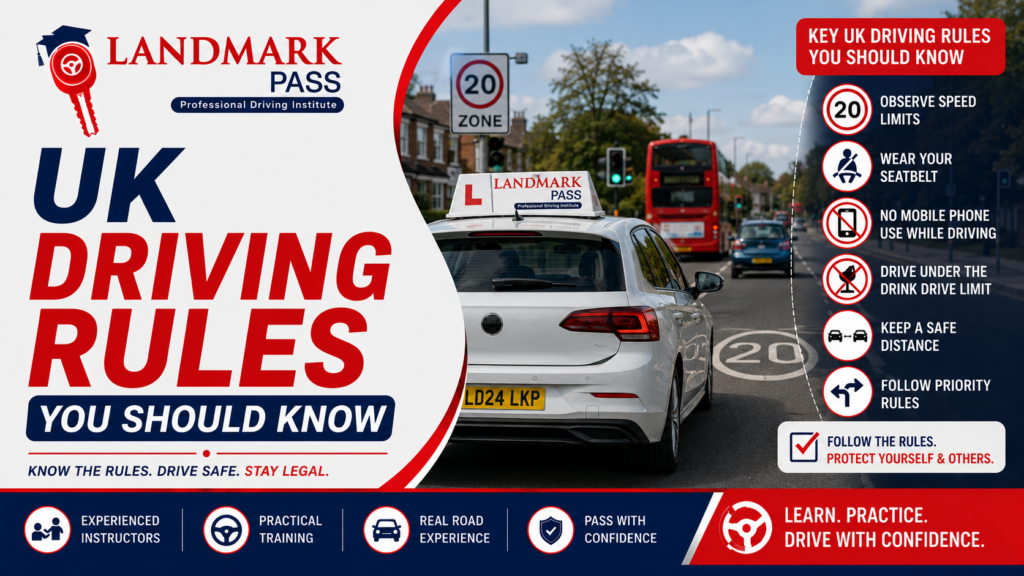
welcome to landmark pass driving tips UK Driving Rules You Should Know More than just driving lessons.At Landmark Pass, our goal isn’t simply to help you pass your driving test. We want you to become a safe, confident and responsible driver for life. Every lesson is designed around your individual progress, helping you understand not just what to do, but why. Book your first lesson UK Driving Rules You Should Know Navigating UK roads legally and smoothly requires an up-to-date knowledge of the Highway Code and statutory traffic laws. Ignorance of the law is not a valid defense, making it vital for all drivers to understand key rules. 1. HIERARCHY OF ROAD USERS (RULES H1, H2, H3)Introduced to protect the most vulnerable road users, the Highway Code hierarchy places the greatest responsibility on drivers of large vehicles, cars, and motorcycles to reduce danger to others. Drivers turning into or out of a junction must give way to pedestrians who are crossing or waiting to cross the road. Additionally, drivers must yield to cyclists riding straight ahead when turning left or right across their path. 2. SPEED LIMIT REGULATIONS AND NATIONAL STANDARDSUnless signs indicate otherwise, built-up areas with street lighting carry a default speed limit of 30 mph (or 20 mph across many residential zones in Wales and urban councils). Single carriageways carry a national speed limit of 60 mph for cars, while dual carriageways and motorways capped at 70 mph. Speed limits represent maximum legal limits in ideal conditions, not target speeds for poor weather or heavy traffic. 3. STRICT MOBILE PHONE LAWSIt is illegal to hold and use a mobile phone, sat nav, tablet, or any device capable of interactive communication while driving or riding a motorcycle. This includes using your device while stopped at traffic lights or queued in traffic. Using a handheld device carries an immediate £200 fine and 6 penalty points. For new drivers within two years of passing their test, 6 points results in the automatic revocation of their driving license. 4. LANE DISCIPLINE AND OVERTAKING ON MULTI-LANE ROADSOn motorways and dual carriageways, you must drive in the left-hand lane unless actively overtaking slower vehicles. Remaining in the middle or outer lane when the left lane is clear—known as “middle-lane hogging”—disrupts traffic flow, causes unnecessary congestion, and is classified as careless driving, carrying fixed penalties and points. 5. YELLOW BOX JUNCTIONS AND ROUNDABOUT PRIORITYYellow box junctions marked with criss-cross lines must be kept clear. You must not enter a box junction unless your exit road is clear and you can clear the box without stopping. The only exception is when turning right, where you may wait inside the box if oncoming traffic or other vehicles turning right prevent you from completing the turn. At standard mini and major roundabouts, always give way to traffic approaching from your immediate right unless marked otherwise.
How to Stay Safe on UK Roads
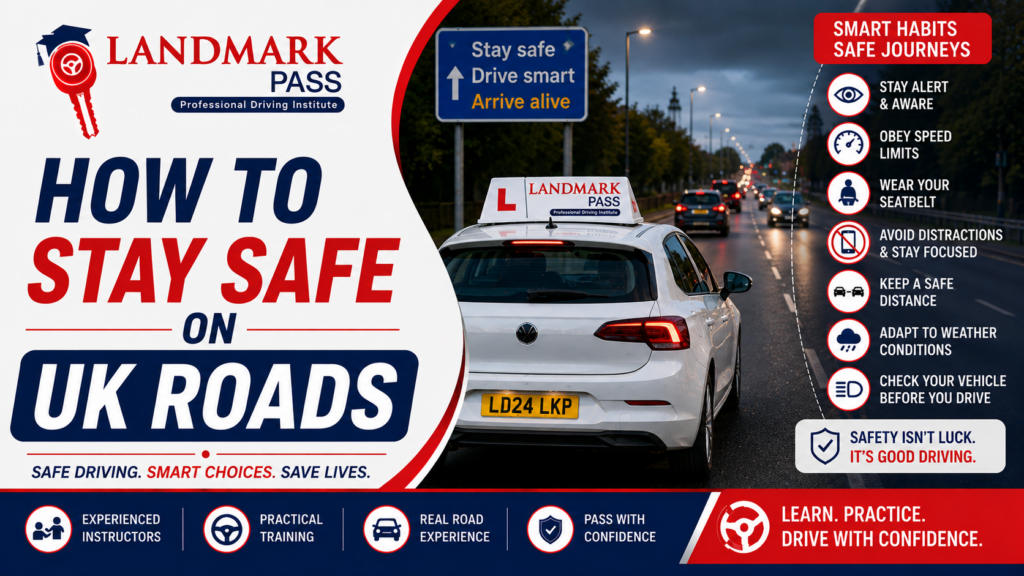
welcome to landmark pass driving tips How to Stay Safe on UK Roads More than just driving lessons.At Landmark Pass, our goal isn’t simply to help you pass your driving test. We want you to become a safe, confident and responsible driver for life. Every lesson is designed around your individual progress, helping you understand not just what to do, but why. Book your first lesson How to Stay Safe on UK Roads Passing your test is just the beginning of your driving journey. Staying safe on UK roads requires continuous vigilance, defensive driving strategies, and an understanding of how environmental conditions affect vehicle dynamics. 1. MAINTAIN SAFE FOLLOWING DISTANCESRear-end collisions remain among the most frequent accidents on UK roads. Always observe the 2-second rule under clear conditions: choose a stationary fixed landmark ahead and ensure two full seconds pass between the vehicle in front passing it and your car reaching it. In rainy weather, double this buffer to 4 seconds, and on icy winter roads, extend the gap up to 10 times the standard distance. 2. ADAPT TO CHANGING WEATHER CONDITIONSUK weather can shift rapidly, bringing heavy rain, fog, or icy patches. When rain begins to fall, reduce your speed to combat aquaplaning—where a film of water causes tyres to lose contact with the road surface. In thick fog, switch on your rear fog lights when visibility drops below 100 meters, but remember to turn them off once visibility improves so you do not dazzle drivers behind you. 3. ELIMINATE IN-CABIN DISTRACTIONSModern vehicles are packed with potential distractions. Set your navigation destinations, mirror positions, and climate control preferences before releasing the handbrake. Keep your mobile phone stowed away out of sight or secured in a dashboard holder if using it for navigation. Taking your eyes off the road for even two seconds at 30 mph means traveling over 26 meters completely blind. 4. EXPECT UNEXPECTED HAZARDSDefensive driving means scanning constantly for vulnerable road users. Give cyclists and motorcyclists at least 1.5 meters of clearance when overtaking at speeds up to 30 mph, and leave more space at higher speeds. In rural or country lanes, slow down when approaching blind bends, as horse riders, agricultural vehicles, or mud on the road may await just out of sight. 5. COMBAT DRIVER FATIGUE ON LONG TRIPSDriving while tired significantly slows reaction times and impairs judgement. On long journeys, especially across motorway networks, plan rest stops every two hours for at least 15 minutes. If you feel drowsiness setting in while driving, pull over safely at the nearest service station, consume caffeine if desired, and take a short 15-to-20-minute nap before proceeding.