How to Stay Safe on UK Roads
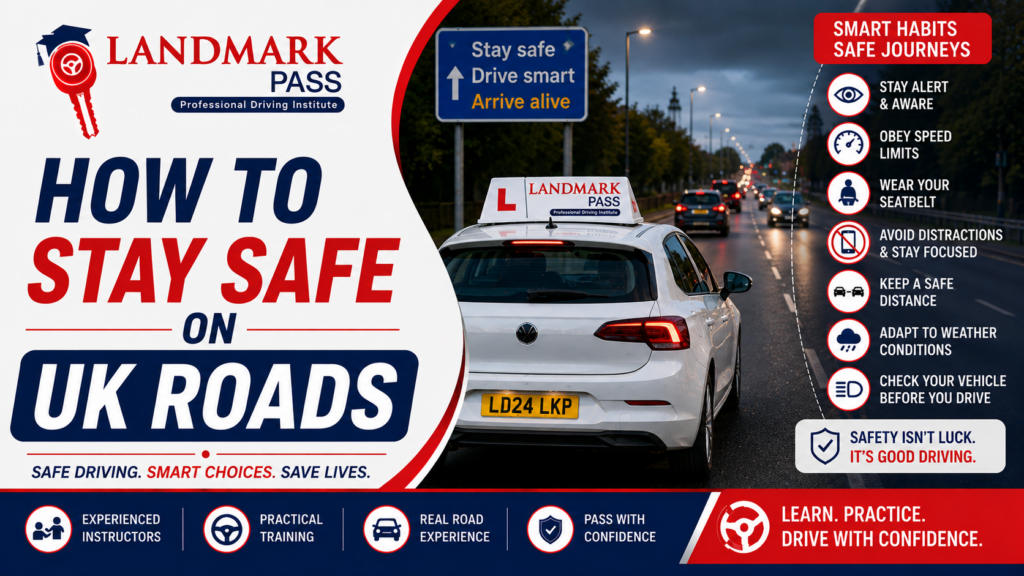
welcome to landmark pass driving tips How to Stay Safe on UK Roads More than just driving lessons.At Landmark Pass, our goal isn’t simply to help you pass your driving test. We want you to become a safe, confident and responsible driver for life. Every lesson is designed around your individual progress, helping you understand not just what to do, but why. Book your first lesson How to Stay Safe on UK Roads Passing your test is just the beginning of your driving journey. Staying safe on UK roads requires continuous vigilance, defensive driving strategies, and an understanding of how environmental conditions affect vehicle dynamics. 1. MAINTAIN SAFE FOLLOWING DISTANCESRear-end collisions remain among the most frequent accidents on UK roads. Always observe the 2-second rule under clear conditions: choose a stationary fixed landmark ahead and ensure two full seconds pass between the vehicle in front passing it and your car reaching it. In rainy weather, double this buffer to 4 seconds, and on icy winter roads, extend the gap up to 10 times the standard distance. 2. ADAPT TO CHANGING WEATHER CONDITIONSUK weather can shift rapidly, bringing heavy rain, fog, or icy patches. When rain begins to fall, reduce your speed to combat aquaplaning—where a film of water causes tyres to lose contact with the road surface. In thick fog, switch on your rear fog lights when visibility drops below 100 meters, but remember to turn them off once visibility improves so you do not dazzle drivers behind you. 3. ELIMINATE IN-CABIN DISTRACTIONSModern vehicles are packed with potential distractions. Set your navigation destinations, mirror positions, and climate control preferences before releasing the handbrake. Keep your mobile phone stowed away out of sight or secured in a dashboard holder if using it for navigation. Taking your eyes off the road for even two seconds at 30 mph means traveling over 26 meters completely blind. 4. EXPECT UNEXPECTED HAZARDSDefensive driving means scanning constantly for vulnerable road users. Give cyclists and motorcyclists at least 1.5 meters of clearance when overtaking at speeds up to 30 mph, and leave more space at higher speeds. In rural or country lanes, slow down when approaching blind bends, as horse riders, agricultural vehicles, or mud on the road may await just out of sight. 5. COMBAT DRIVER FATIGUE ON LONG TRIPSDriving while tired significantly slows reaction times and impairs judgement. On long journeys, especially across motorway networks, plan rest stops every two hours for at least 15 minutes. If you feel drowsiness setting in while driving, pull over safely at the nearest service station, consume caffeine if desired, and take a short 15-to-20-minute nap before proceeding.
Night Driving Tips for Better Safety
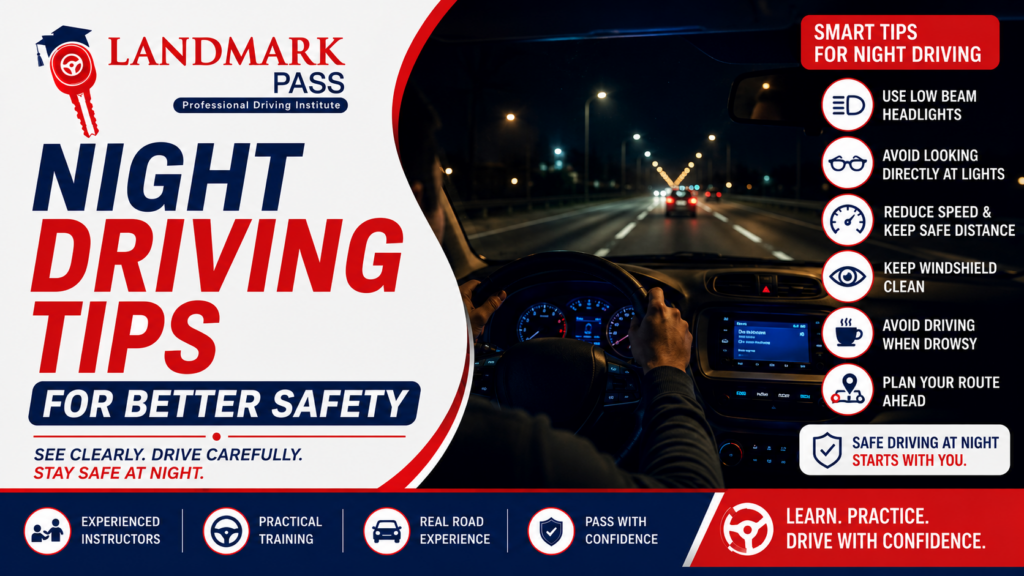
welcome to landmark pass Night Driving Tips for Better Safety More than just driving lessons.At Landmark Pass, our goal isn’t simply to help you pass your driving test. We want you to become a safe, confident and responsible driver for life. Every lesson is designed around your individual progress, helping you understand not just what to do, but why. Book your first lesson Night Driving Tips for Better Safety Driving after dark introduces unique hazards that require heightened alertness and modified driving habits. Darkness drastically reduces visual range, distorts depth perception, and subjects your eyes to blinding glare from oncoming headlights. Adapting your driving technique for night conditions ensures you stay safe and relaxed on dark roads. PROACTIVE HEADLIGHT MANAGEMENTRelying on automatic lighting systems isn’t always enough. Make it a habit to manually turn on your dipped headlights one hour before sunset and keep them on until one hour after sunrise, as well as during any periods of reduced visibility like heavy rain, fog, or dark clouds. Dipped headlights don’t just help you see the road ahead; they make your vehicle clearly visible to other drivers, cyclists, and pedestrians from a safe distance. COUNTERING HEADLIGHT GLARE AND DAZZLEBright LED headlights from oncoming traffic can temporarily dazzle your vision and create night blindness. If an oncoming vehicle’s high beams dazzle you, resist the urge to stare directly into the lights or blind them back with your own high beams. Instead, gently shift your focal point down toward the left-hand edge of the road (the curb or white lane line) to guide your steering path safely until the vehicle passes. MAINTAINING CRYSTAL-CLEAR GLASS SURFACESDirt, dust, and smoke haze build up on the inside and outside of your windscreen and mirrors over time. While this buildup may be invisible during daylight, night traffic lights and oncoming headlights hit these microscopic particles, causing severe light smearing and intense glare across your field of vision. Regularly clean the interior and exterior of your glass with dedicated auto glass cleaner. INCREASING SPATIAL BUFFERS AND STOPPING MARGINSHazard recognition takes significantly longer at night because pedestrians, cyclists, unlit vehicles, and debris are harder to spot beyond your headlight beam projection. To compensate for delayed reaction times, reduce your overall cruising speed slightly on unlit roads and double your following distance behind other vehicles. This extra breathing room grants you the crucial seconds needed to react smoothly to sudden hazards.