Top Tips For Your Driving Tests
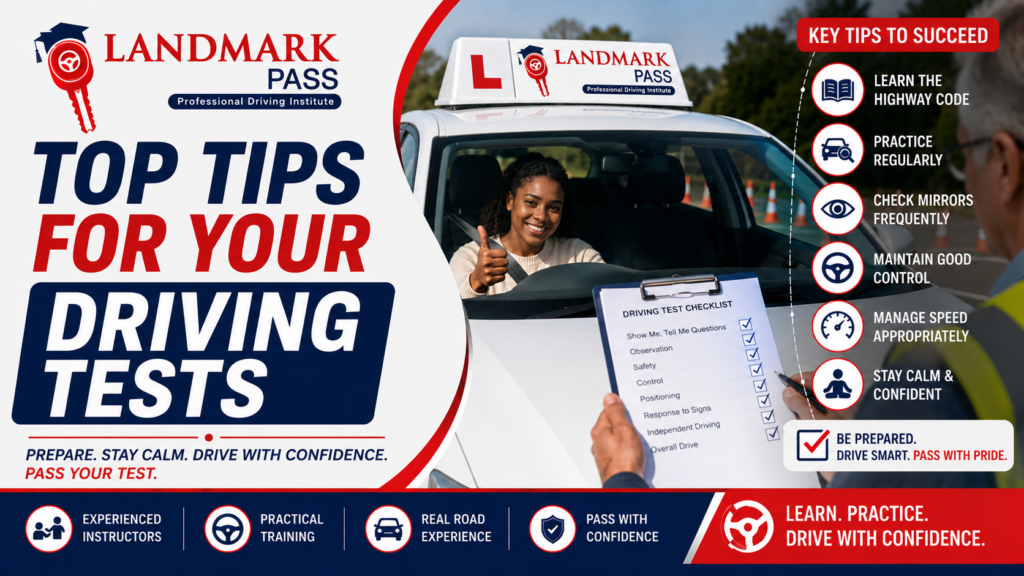
welcome to landmark pass driving tips Top Tips For Your Driving Tests More than just driving lessons.At Landmark Pass, our goal isn’t simply to help you pass your driving test. We want you to become a safe, confident and responsible driver for life. Every lesson is designed around your individual progress, helping you understand not just what to do, but why. Book your first lesson Top Tips For Your Driving Tests Taking your practical driving test is often the final hurdle between learning and independent freedom. While feeling nervous is completely natural, thorough preparation and a structured approach during the exam can drastically boost your chances of passing on your first attempt. 1. MASTER YOUR LOCAL TEST ROUTES AND JUNCTIONSWhile examiners can alter routes based on traffic or roadworks, they generally rely on standard test circuits surrounding the local test centre. Spend the weeks leading up to your exam practicing tricky multi-lane roundabouts, tight residential streets with high density parking, and steep hill starts in your area. Eliminating local route surprises allows you to focus purely on safe, methodical driving. 2. EMBED THE MIRROR-SIGNAL-MANEUVER (MSM) ROUTINEThe single most common cause of test failures involves poor observation. Make the MSM routine an automatic reflex. Check your interior and exterior mirrors BEFORE signaling, BEFORE changing speed (braking or accelerating), and BEFORE altering vehicle position. Make your mirror checks clear by moving your head slightly so the examiner registers your scanning awareness. 3. TAKE YOUR TIME WITH REVERSING MANEUVERSDuring the test, you will be asked to perform one parallel park, reverse bay park, forward bay park, or pull up on the right side of the road. Remember that maneuvers are not a race. Drive at a slow, controlled crawl using clutch balance or precise pedal control in an automatic. Prioritize 360-degree observations; if a pedestrian or another vehicle approaches, pause and allow them to pass or clarify their intentions before continuing. 4. RECOVER CALMLY FROM MINOR MISTAKESStalling the engine or hitting a curb lightly during a maneuver does not automatically mean you have failed. What matters most is how safely and calmly you respond. If you stall, secure the car with the handbrake, select neutral, restart the engine, complete your mirror checks, and move off safely. Dwelling on a minor hiccup causes distraction, leading to secondary faults down the road. 5. PRACTICE INDEPENDENT DRIVING WITH SAT NAV AND SIGNSRoughly 80% of practical tests involve following directions from a satellite navigation unit, while the remaining 20% involve following traffic signs. Practice navigating independently during your lessons without relying on your instructor’s verbal cues. If you miss a turn or take the wrong exit at a roundabout during the test, do not panic; as long as you navigate safely, taking a wrong route will not result in a fault.
How to Prepare for Your Practical Driving Test
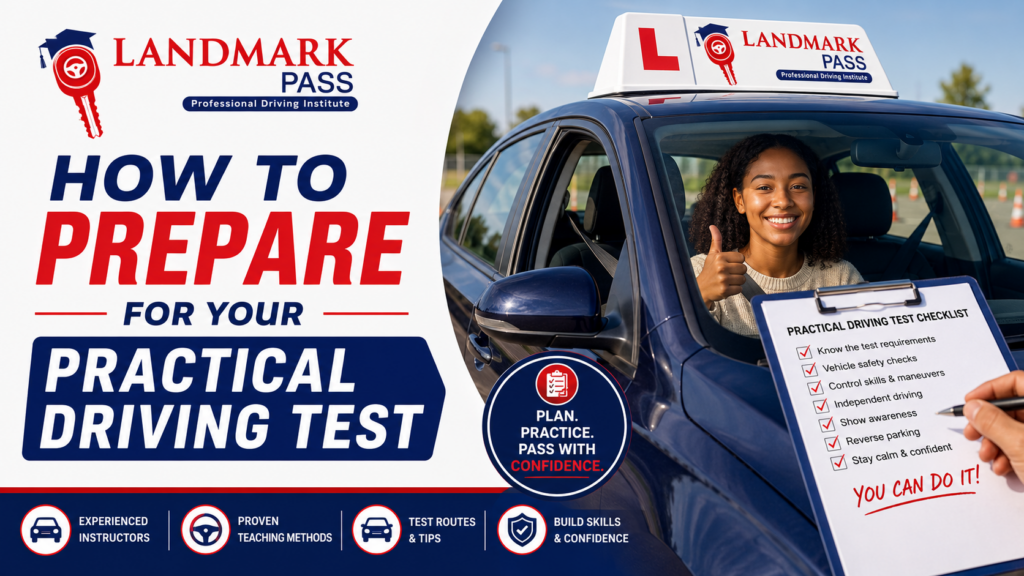
welcome to landmark pass How to Prepare for Your Practical Driving Test More than just driving lessons.At Landmark Pass, our goal isn’t simply to help you pass your driving test. We want you to become a safe, confident and responsible driver for life. Every lesson is designed around your individual progress, helping you understand not just what to do, but why. Book your first lesson How to Prepare for Your Practical Driving Test Passing your DVSA practical driving test comes down to two major factors: thorough technical preparation and controlling test-day nerves. While many learners focus entirely on vehicle control during their lessons, mental readiness and organizational preparation are just as critical to securing that first-time pass. DOCUMENTATION & NIGHT-BEFORE PREPARATIONThe foundation of a stress-free test day begins the night before. Gather all required documentation, including your photocard provisional driving license, your theory test pass certificate, and your booking confirmation email. Layout comfortable driving shoes (avoid thick-soled boots or heavy heels) and get a full night of restful sleep. Running around in a panic searching for lost paperwork on the morning of your test elevates your heart rate and sets a negative tone before you even sit in the vehicle. THE PRE-TEST WARMUP LESSONSchedule a 1-hour driving lesson with your instructor immediately prior to your official test time. This hour is not meant for learning new techniques; rather, it serves to get your feet back on the pedals, recalibrate your steering feel, and warm up your situational awareness. It allows you to shake off initial jitters, practice a quick maneuver, and get accustomed to the current weather and traffic conditions around the test centre area. MASTERING COMPLEX LOCAL TEST ROUTESDuring your final preparation weeks, dedicate practice sessions to navigating the specific challenges of your local test centre’s surrounding routes. Focus extra effort on multi-lane roundabouts, difficult dual carriageway merges, tight residential streets with parked car hazards, and speed-change zones. Becoming intimately familiar with local lane layouts and tricky junctions removes the element of surprise, leaving you free to focus strictly on safe decision-making. ADOPTING THE RIGHT MINDSETRemember that DVSA examiners are not looking for perfection; they are looking for safety. Examiners do not have a quota of failures to hit, nor are they actively trying to catch you out. Their primary job is to ensure that you can operate a vehicle independently without placing yourself, your examiner, or other road users at risk. Treat your examiner as a regular passenger who is simply giving you navigation directions, and drive with the calm, methodical approach you practice during your standard lessons.